Why Do Companies Use Travel Agencies?
21.05.2026 06:35
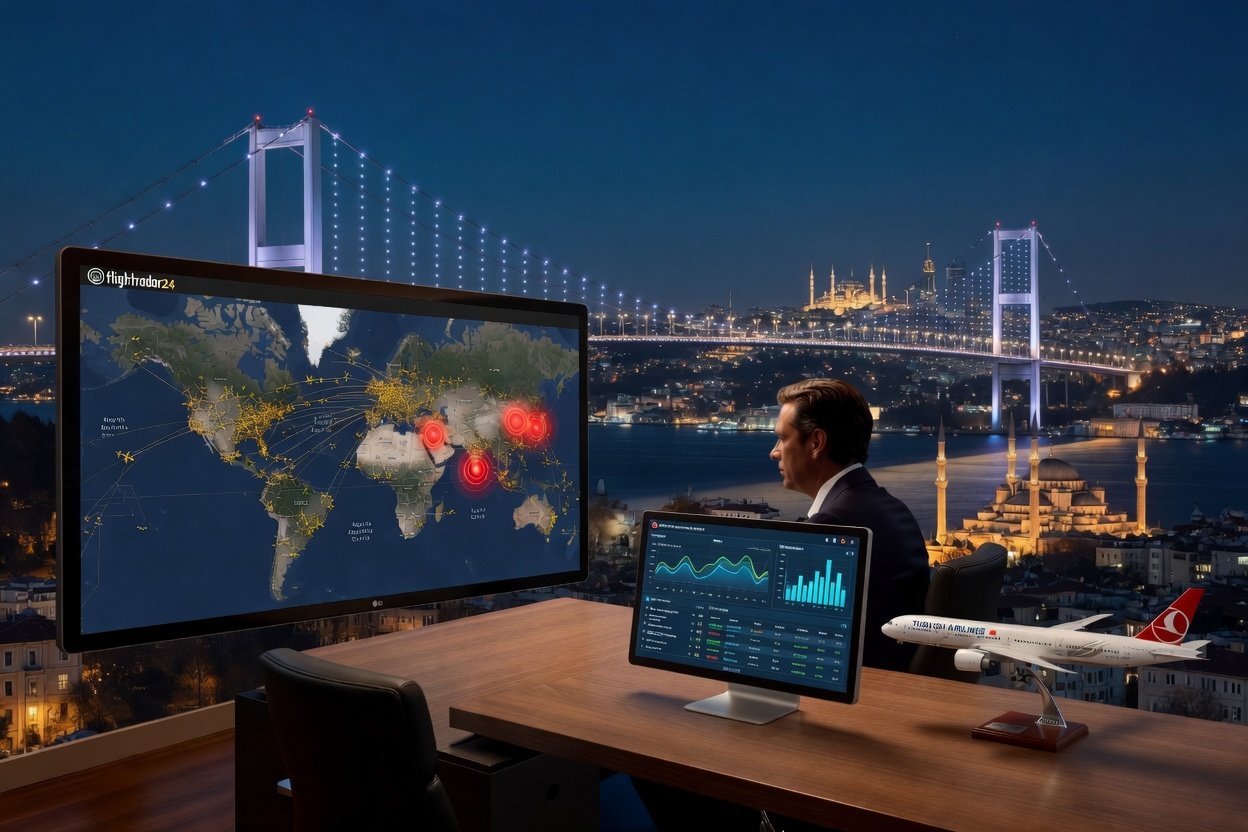
Why Is Corporate Travel Management Becoming More Critical as Geopolitical Risks Increase? After the pandemic, it was said that "travel agencies would disappear." But the world proved the opposite. Geopolitical risks are driving companies toward strategic travel partnerships.
Why Is Corporate Travel Management Becoming More Critical as Geopolitical Risks Increase?
During the pandemic period, many predicted that corporate travel would become fully digital. With the widespread adoption of Zoom meetings, online events, and AI-powered booking tools, the idea that "the role of travel agencies will decline" became a major topic of discussion. However, developments in the following years largely disproved this prediction.
Corporate Travel Is No Longer Just About Tickets, It Is About Risk Management
The Russia-Ukraine war, tensions in the Middle East, sudden airspace closures, and global economic fluctuations reminded companies of a critical reality: Corporate travel is an integral part of risk management.
Today, corporate travel managers are no longer only comparing prices. Their priorities have fundamentally changed:
- Is the employee safe in the country they are traveling to?
- Is an alternative plan ready if the flight route suddenly changes?
- Who will reach the employee and how in case of a crisis?
- Who will manage operations if cancellation or evacuation is required?
These questions are concrete indicators of the transition from the "cheapest ticket" approach to the "safe and manageable travel" model.
Duty of Care: Companies’ Legal and Reputational Responsibility
The concept of duty of care — companies’ obligation to protect employees while traveling — is now among the top priorities on the corporate agenda. Political crises, natural disasters, health issues, or flight cancellations create not only operational but also legal and reputational risks.
For this reason, companies today prefer business partners that provide the following infrastructure:
- Real-time traveler tracking systems
- Fast rebooking support
- 24/7 accessible crisis management hotline
- Proactive information solutions
[link suggestion: Duty of Care / corporate travel policy page]
Technology Is Powerful, But Not Sufficient
Online booking platforms offer highly practical solutions for individual travel. However, corporate operations have a much more complex structure: multiple destinations, changing schedules, visa processes, meeting coordination, budget control, and crisis management must all be managed simultaneously.
Especially in unexpected situations, what companies need is not an "automatic system notification"; they need an experienced business partner that can take initiative, create alternatives, and assume responsibility.
[link suggestion: VikingOn technology platform page]
MICE and Face-to-Face Meetings Are Growing Again
Despite the adoption of digital meetings after the pandemic, companies realized that no screen could fully replace the synergy created by face-to-face communication. Leadership meetings, dealer organizations, incentive trips, and regional summits have started growing again.
However, the rules of the game are different this time: Fewer organizations, higher impact. This brings planning quality, risk management, and operational expertise to the forefront.
Türkiye and Istanbul: A Rising Position as a Regional Hub
In an environment of global uncertainty, Türkiye is becoming a strategic regional hub for many international companies. Its position as a bridge between Europe, the Gulf, and Central Asia, Turkish Airlines’ extensive network, strong congress infrastructure, and cost advantages are among the main reasons for this interest.
Istanbul has especially become a strong attraction center for international organizations and regional meetings in recent years.
Viking Tourism: Strategic Travel Partnership
With more than 40 years of experience, Viking Tourism approaches corporate travel not only as a booking process but as a whole consisting of risk management, technology, data, and crisis support.
The VikingOn platform ensures daily operational efficiency, while the expert team behind it practically fulfills your duty of care responsibilities. From creating travel policies to MICE organization, from visa processes to ESG reporting, we support you across all aspects of corporate travel.
Conclusion
In this new era where geopolitical risks are increasing and uncertainty has become permanent, corporate travel management is transforming from a cost item into a strategic management tool. Companies are no longer buying tickets; they are investing in security, expertise, and business continuity.
Frequently Asked Questions
What is a corporate travel management company (TMC)?
A corporate travel management company (TMC) is a professional business partner that plans companies' business trips end-to-end, covering reservations, cost control, employee safety, and crisis management. It does not only handle flight and hotel bookings; it also manages travel policy creation, data reporting, and duty of care processes.
How do geopolitical risks affect corporate travel?
Situations such as geopolitical risks, airspace closures, sudden visa changes, and security threats directly affect corporate travel plans. Therefore, companies now prefer to work with partners that provide proactive crisis management, real-time traveler tracking, and alternative route capabilities rather than focusing only on cost.
Why do companies continue working with travel agencies?
Corporate travel includes interconnected processes such as multiple destinations, changing schedules, visa coordination, meeting management, and duty of care. While online platforms are practical for individual travel, managing this complexity requires an experienced and accessible business partner available 24/7.
What is the difference between individual online booking and corporate travel management?
Individual online booking handles one-time, standard transactions. Corporate travel management, on the other hand, is a multi-layered structure that includes negotiated group rates, integration with company travel policies, centralized reporting, crisis support, and employee safety responsibilities. The cost and risk differences between these two approaches are clearly visible in practice.
Why is Istanbul preferred for corporate MICE organizations in Türkiye?
Istanbul has become one of the leading destinations for international MICE organizations thanks to its strategic location between Europe, the Gulf, and Central Asia, Turkish Airlines’ extensive flight network, strong congress and hotel infrastructure, and competitive cost structure. With the growth of hybrid event capabilities, Istanbul is increasingly preferred for regional meetings.