Transparency in Corporate Travel Management: Hidden Fees (Markup) in Airline Tickets
10.12.2025 07:38
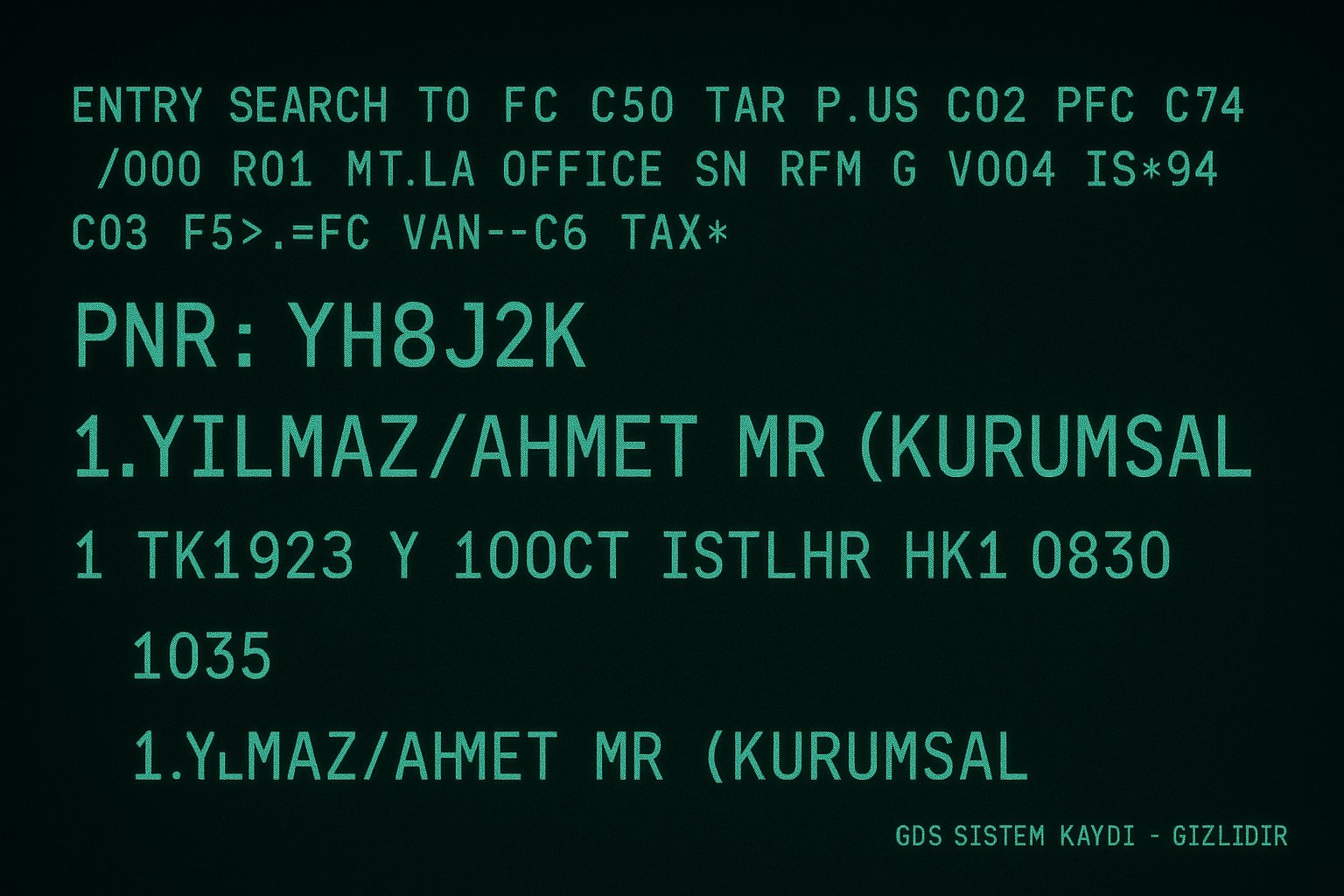
Cost Control in Corporate Travel Management: How to Detect Hidden Fees (Markup) in Airline Tickets
Among companies’ operational expense items, corporate travel expenses usually rank within the top three. As a Procurement Manager or Corporate Travel Manager, we know the critical question on your mind:
"Is this really the actual price of the ticket we paid, or has an undisclosed profit (markup) been added on top?"
Corporate travel agencies have the right to charge a transparent Service Fee in return for their professional services. However, according to global ethical standards and transparent procurement principles, this fee must be clearly stated. Unfortunately, in the industry, hidden costs can sometimes be encountered—disguised under the name of "tax" or reflected in invoices as a so-called "system error."
In this article, we have compiled 7 professional methods—approaching with the diligence of a travel auditor—that will help you learn your ticket’s Naked Fare and optimize your travel expenses.
Request a "Priced Itinerary"
Manipulating numbers on a standard PDF document is quite easy in the digital age. However, if you demand transparent travel management, ask your agency not for a standard template, but for technical proof.
- How to Do It? Ask your agency to send reservation details not in their own format, but directly via the Global Distribution System (GDS - Amadeus, Sabre, Galileo, Troya, etc.) or airline system as an "Automatic Email."
- Why Is It Secure? Prices in emails sent directly from the system in IEP (Itinerary Email Print) format cannot be manually manipulated. This document is the most reliable cross-checking tool for your invoice.
The Litmus Test of Transparency: "Split Payment" by Credit Card
The cleanest audit method in corporate payments is checking via the credit card statement. The key term here is: Split Payment.
- Transparent Method: The total amount is split into separate charges.
- Transaction 1: Ticket fare (e.g., 10,000 TRY) is charged directly through the airline’s POS (your statement shows "THY", "Lufthansa", etc.).
- Transaction 2: Agency service fee (e.g., 500 TRY) is charged through the agency’s POS.
- Risky Method: The entire amount is charged in one transaction through the agency POS. In this case, the agency can hide the net amount paid to the airline and the added profit margin under a single item.
"Manage Booking" Control via Airline Portals
Digitalization has made auditing easier. The 13-digit Ticket Number and 6-digit Reservation Code (PNR) provided when your ticket is issued are your strongest audit tools.
- Audit Step: Go to the airline’s official website or mobile app. Enter your PNR and last name in the "Manage Booking" section.
- Result: Many modern airlines display the original price recorded in the system under "View E-Ticket" or "Receipt." Compare this with your invoice; if there is a difference, a hidden markup may have been applied.
Manual Verification: Direct Contact with the Airline
If you are not satisfied with digital data, use the traditional but most reliable method.
- Method: Call the airline’s call center or visit the airport sales office and ask: "This is my ticket number—can you tell me the net amount paid in your system (including taxes, excluding service fees)?" Airline staff are obligated to share this information.
Technical Detail: Reading the "Fare Calculation" Line on the E-Ticket
On your electronic ticket, there is usually a line made up of complex codes that often goes unnoticed: the Fare Calculation Line.
- Code Interpretation: For example, when you see IST TK LON 200.00, the numbers (usually in NUC currency) represent the Base Fare.
- Tax Check: If your agency says "taxes are very high," check the tax codes (YQ, YR, TR) on the ticket. If these amounts are low but your invoice is high, the difference may be a hidden service fee.
"Shadow Audit" with Corporate Loyalty Programs
Your company’s membership in programs such as Turkish Airlines Corporate Club, Lufthansa PartnerPlusBenefit, or Emirates Business Rewards not only provides discounts or upgrades but also serves as an excellent reporting tool.
- Data Verification: All tickets issued with your company tax number automatically appear in the airline’s corporate portal.
- Cross-Check: At the end of the month, compare your agency’s expense report with the "Flight/Spending Statement" from the airline portal. You can verify the airline’s net cost against the agency invoice down to the cent. This is the easiest audit method for procurement departments.
Attention: Online Travel Agencies (OTA) and Hidden Costs
Employees or managers who turn to Online Travel Agencies (OTA) saying "I found it cheaper online" may not always choose the most transparent option.
Remember that online platforms also operate for commercial profit. Differences may arise between the initial price shown on comparison sites and the final price at checkout (due to Dynamic Currency Conversion or payment processing fees). All the audit mechanisms mentioned above (Fare Calculation, PNR check, etc.) also apply to tickets purchased from online agencies. Do not overlook auditing these platforms in your corporate travel policy.
Leverage Technology: Independent Airfare Auditing Tools
For companies that do not want to waste time on manual checks or that manage high travel volumes, the most practical solution is to use technology. Independent ticket auditing and verification tools like Airocheck.com can complete the process within seconds.
- How It Works? These platforms analyze your ticket’s PNR or electronic data and automatically compare the actual (net) price in the airline system with the amount billed to you.
- Advantage: They not only detect hidden markups but also report cancellation/refund rules, unused ticket tracking, and tax inconsistencies, offering your company a "Digital Travel Auditor" service. Adding such a "third-eye" auditing tool to your travel policy can prevent cost leakages almost entirely.
With Viking Tourism, Transparency Is Not a Choice—It Is the Standard.
Effective corporate travel management is not just about finding the cheapest ticket; it is about ensuring costs are auditable, transparent, and manageable. As Vikingon, we offer a system that eliminates the need for our clients to audit their agencies.
The "Priced Itinerary" reporting, credit card Split Payment, and Loyalty Program Integration mentioned in this article are not special requests for us—they are standard procedures. Spend your energy growing your business, not auditing your agency. Let’s build your company’s travel structure on Vikingon’s 100% transparent infrastructure and eliminate hidden costs together.